
Dental Hygienist Salary & Job Market in Canada
Key Findings from the 2025 Job Market & Employment Survey for Dental
Hygienists
-
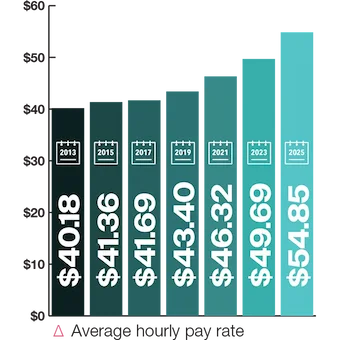
The average dental hygienist salary in Canada in 2025 is
$54.85 per hour.
-
The unemployment rate among dental hygienists is 0.5%, far below the
national average.
-
More than 1 in 4 dental hygienists plan to leave the
profession within five years, primarily due to retirement.
-
Independent dental hygiene practice continues to grow, with
6% of respondents owning a practice.
What is the CDHA 2025 Job Market & Employment Survey?
The Canadian Dental Hygienists Association (CDHA) conducted its biennial
Job Market & Employment Survey in September 2025 to collect national
and regional data on employment and job market trends for dental
hygienists in Canada. This information aims to improve career
opportunities for dental hygienists across Canada. The survey was
carried out by a contracted third party to ensure confidentiality and
privacy of responses.
How many dental hygienists participated?
A total of 3,003 dental hygienists completed the survey, representing a
16% response rate. Results reflect the views of CDHA members and may not
represent the entire profession.
What is the demographic profile of dental hygienists in 2025?

-
Average age: 45 (up from 40 in 2019), evenly spread between ages 30-59
- Gender: 97% female (unchanged for 10+ years)
-
Indigenous identity: 3% identify as First Nations, Métis, or Inuit
-
Education: 87% hold a dental hygiene diploma; 45% have post-secondary
education outside of dental hygiene
Is dental hygiene in demand in Canada?
Yes. The dental hygienist unemployment rate in Canada is
just 0.5%. Indicating strong demand across the country.
What does employment look like for dental hygienists?

- 56 % of dental hygienists work full time and 40 % work part time
-
The unemployment rate is very low at 0.5%, far below Canada’s national
rate of 7.1%
-
Average weekly hours: 31.5 overall; 36.6 full-time; 23.5 part-time
-
Preferred hours: 71% work their preferred schedule; 21% want fewer
hours; 8% want more
-
Temporary work: 11% work as temps for higher pay or added flexibility
Where do dental hygienists practice?

-
91% of dental hygienists provide direct patient care in a dental or
dental hygiene practice
- 85% of jobs are in general dental practices
How much do dental hygienists make in Canada?
The average dental hygienist salary in Canada is $54.85 per hour.
How are dental hygienists compensated?
- The average effective hourly wage in Canada is $54.85
- 15% of jobs offer a bonus (≈2.1% of base pay)
- 60% of dental hygienists saw wage increases in the past year
Which provinces pay dental hygienists the most?
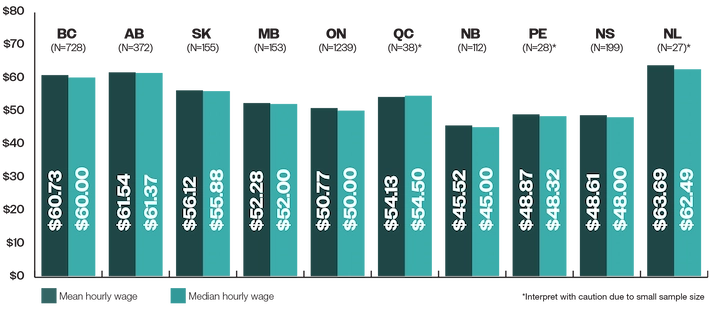
Alberta and British Columbia report the highest average hourly wages for
dental hygienists, at $61.54 and $60.73 respectively.
Which provinces have the fastest wage growth for dental hygienists?
Top growth since 2015 is in New Brunswick (46%), followed by Nova Scotia
(44%), and British Columbia (41%)
What factors impact compensation?

-
Experience: Wage increases plateau around ages 35–39 and 11–15 years of
experience
-
Gender: Male dental hygienists earn ~8% more (but only 3% of
respondents)
-
Education: Bachelor's degree holders earn ~9% more than diploma holders
-
Employment status: Part-time earns ~2% more than full-time;
temp/contract earns ~8% more
-
Setting: Clinical wages are on average ~3% higher than non-clinical
positions
What benefits do dental hygienists receive?
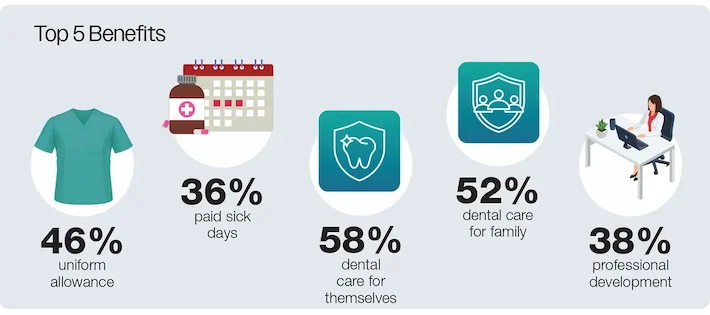
- 89% of dental hygienists receive at least one benefit
-
Top benefits are dental care for self (58%), dental care for family
(52%), uniform allowance (46%), professional development (38%), and paid
sick days (36%)
What about independent dental hygiene practices?
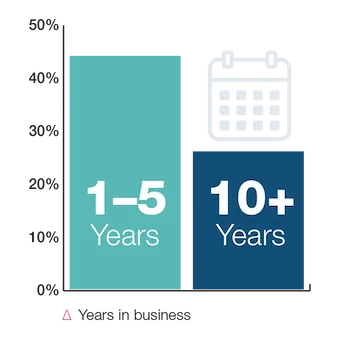
- 6% of respondents own an independent practice
- Average time in business: 7 years; 44% operating for 1–5 years
What are dental hygienists' plans?

Survey results point to continued workforce movement, with a significant
portion of dental hygienists planning job changes or retirement in the
coming years.
-
Job changes: 13% changed jobs in the past year; 15% actively seeking
new opportunities
-
Turnover risk: 28% plan to leave the profession within five years; 9%
within two years
- Top reason for leaving: Retirement (74%)